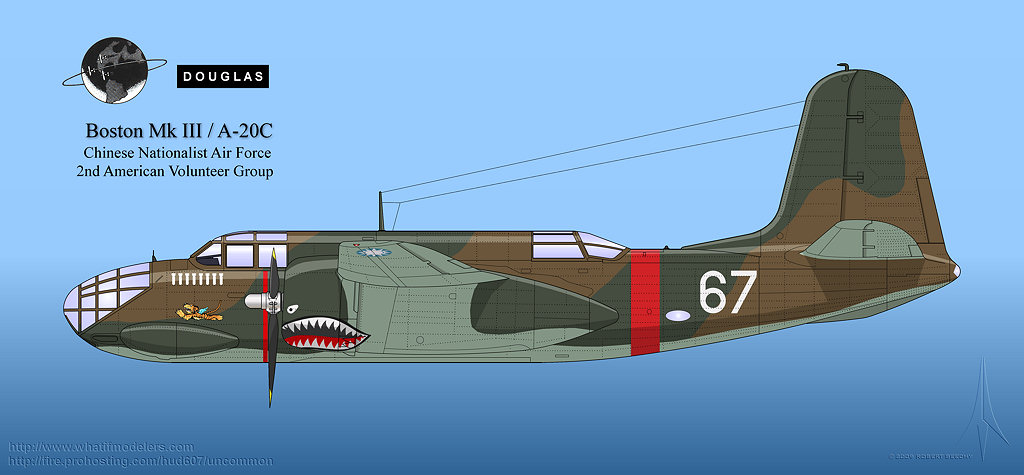
Douglas DB-7 Boston Mk III / A-20C
Fictional profiles of the Douglas DB-7 used by the 2nd American Volunteer Group ("Flying Tigers") during World War II.
I like the way that the panel rivets turned out. They were fairly easy to draft in AutoCAD by using a non-continuous linetype consisting of dots.
February 2009
In the fall of 1941, the 2nd American Volunteer Group was equipped with 33 Lockheed Hudson (A-28) and 33 Douglas DB-7 (A-20) bombers originally built for Britain but acquired
by the U.S. Army as part of the Lend-Lease program passed earlier in the year. The Central Aircraft Manufacturing Company, fronting for the Chinese and American governments,
recruited 82 pilots and 359 ground crew from the U.S. Army in the fall of 1941 and an undetermined number, including one pilot, sailed for Asia aboard Bloemfontein of
the Java-Pacific line. Other pilots reported to San Francisco and were scheduled to depart aboard the Lockheed Hudsons on 10 December. The Douglas DB-7s were to have gone by
freighter to Africa, to be assembled and ferried to China but the 7 December 1941, attack on Pearl Harbor caused the program to be aborted. The vessels at sea were diverted
to Australia, the aircraft were taken back into American service and most of the personnel rejoined the military, either in Australia or in the U.S.
From Wikipedia.
|
| Chinese Nationalist Air Force, 2nd American Volunteer Group. |
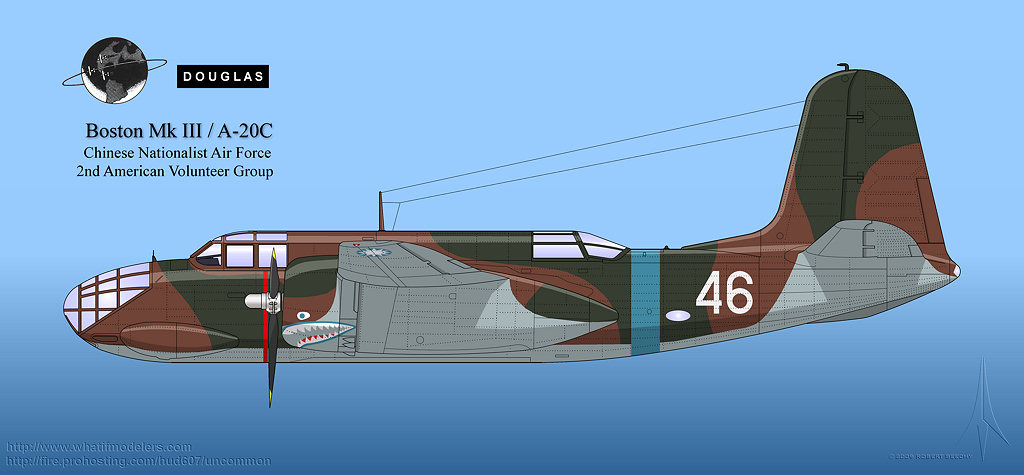 |
| Chinese Nationalist Air Force, 2nd American Volunteer Group. |
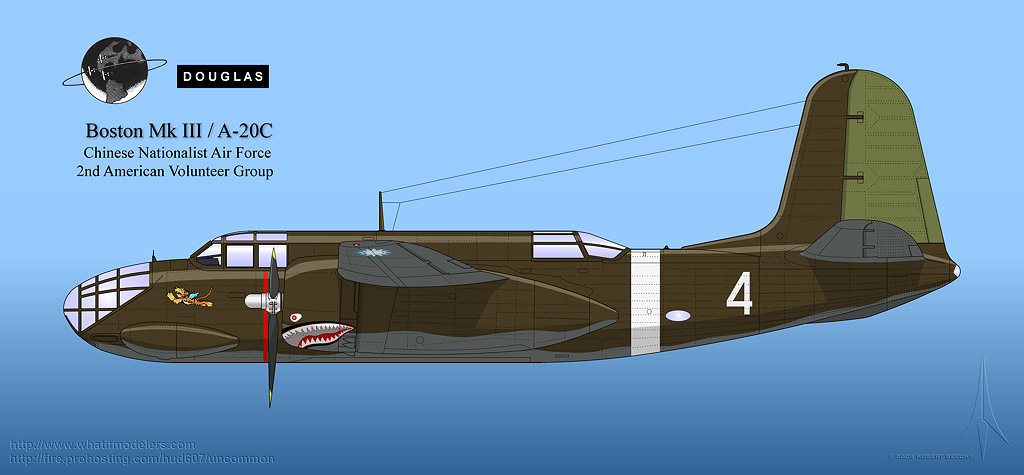 |
| Chinese Nationalist Air Force, 2nd American Volunteer Group. |
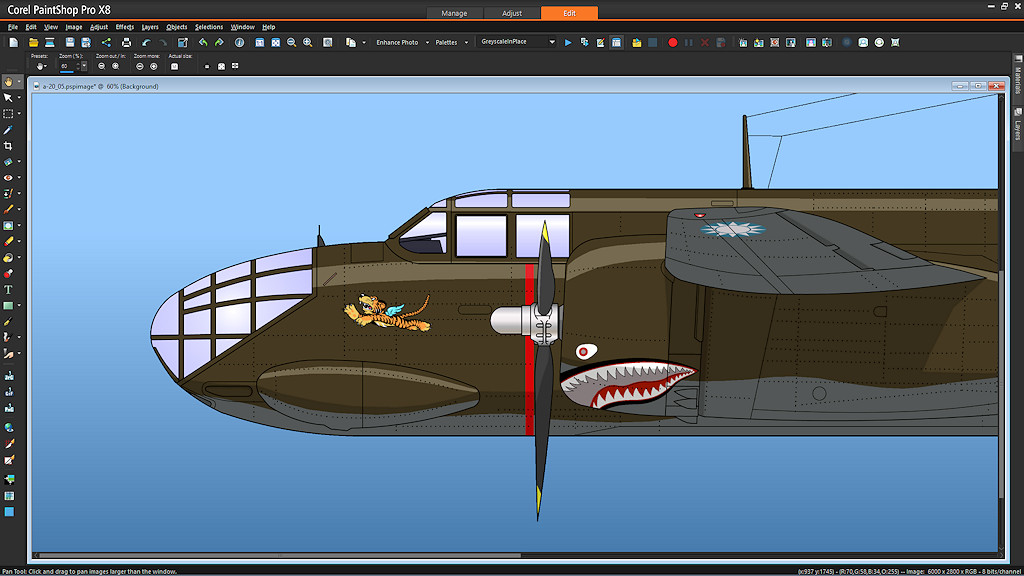 |
| Enlarged view |
 |
 |